
Blog
How to Cool Down a Room (And Keep Your House Cool All Summer)
Every summer it's the same story. The sun comes out, the temperature climbs, and suddenly your home feels like a greenhouse. Here's how to actually fix it: from quick wins today to the structural change that solves it permanently, without relying on air conditioning.
Why is my house so hot in the first place?
Most UK homes were built to keep heat in, not out: solid or lightly insulated brick walls, single-layer render, and roofs that soak up sun all day. During a heatwave, that same brickwork absorbs heat from mid-morning onwards and keeps radiating it back into the rooms long after the sun's gone down, which is why a house can feel hotter at 9pm than it did at 3pm.
Add in south or west-facing glazing, poor ventilation, and appliances or loft spaces pumping out extra warmth, and you end up with a house that overheats every summer and struggles to shift that heat once it's trapped.
Quick fixes: cool a room down today
- Close blinds and curtains on south and west-facing windows before the sun hits them, not after
- Open windows at night when the air cools, close them and shut curtains in the morning before it heats up
- Use fans to push hot air out of a room, not just circulate it; face a fan toward an open window
- Put a bowl of ice in front of a fan for a cheap cold-air effect
- Turn off anything that generates heat during the day: ovens, tumble dryers, halogen lamps, standby electronics
- Swap heavy bedding for cotton or linen, and switch to lightweight summer duvets
How to keep a bedroom cool at night
Bedrooms are usually the worst-affected room in a heatwave, since they're often upstairs where heat collects. A few habits make a real difference to sleep quality:
- Keep bedroom curtains or blinds closed all day, not just in the evening
- Run a fan on a low, steady setting rather than switching it on and off
- Keep the bedroom door open in the evening to let trapped daytime heat escape once it's cooler outside
- Freeze a hot water bottle or ice pack and place it near your feet, the coolest part of a bed
- Avoid heavy meals and alcohol close to bedtime, both raise your body temperature
How to keep your house cool without air conditioning
Air conditioning cools a room, but it's expensive to run, expensive to install properly, and it doesn't fix the reason your house overheats in the first place. These medium-term changes reduce how much heat gets in before you ever need to think about cooling it back down:
- Fit blackout blinds or thermal curtains: they block radiant heat before it reaches the glass
- Add solar window film, which reflects heat and costs very little to install
- Create external shading: a pergola, awning, or climbing plants on a south-facing wall all cut direct solar gain
- Use cross-ventilation properly: open windows on opposite sides of the house at night to create a through-draught
- Check loft insulation: heat that builds up in the roof space radiates straight down into upstairs rooms
How to insulate your house from heat: the permanent fix
Most people think of insulation as a winter thing. It isn't. And if your house overheats every single summer no matter what you try, the wall build-up itself is usually the real problem.
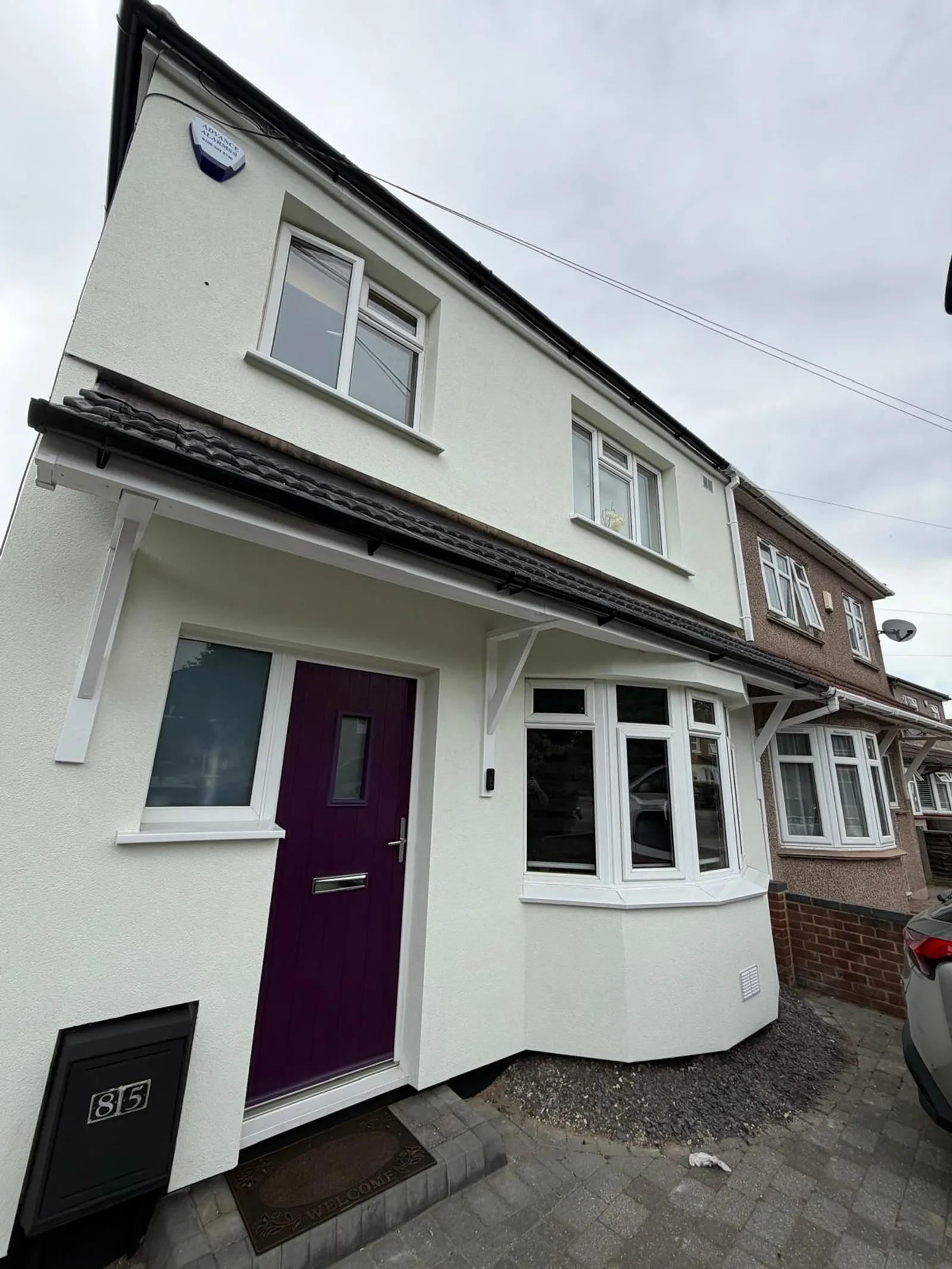
External wall insulation (EWI) works as a thermal buffer. The same layer of insulation that stops heat escaping in January stops heat entering in July. Instead of bare brick absorbing sun all day and radiating it straight into your living room, the insulation and render system sit outside the wall, slowing and reducing the heat that ever reaches the brickwork in the first place. Internal temperatures stay far more stable, even when it's 30°C outside.
A silicone render finish adds to this: it reflects more solar radiation than a dark or heavily textured traditional render, and it's breathable, so moisture doesn't get trapped behind the insulation. Done properly, it's a system, not a product: insulation board, reinforcement layer, and a weatherproof top coat all working together.
A properly insulated home stays cooler for longer without air conditioning, and warmer for longer without the heating on. It's one of the only home improvements that solves both problems with a single install, which is why it's worth investigating even if summer heat is the only complaint that's brought you here.
How to keep your home cool naturally, long term
- Choose a lighter render or paint finish: pale colours reflect more heat than dark ones
- Plant deciduous trees or install a pergola on south-facing elevations for natural seasonal shading
- Insulate the walls and loft together: heat gain through an uninsulated roof undoes a lot of wall-level work
- Reduce paved, heat-absorbing surfaces close to the house where you can
- Ventilate little and often rather than leaving a house sealed all day
Frequently asked questions
Why is my house so hot even with the windows open?
Open windows only help once the air outside is cooler than the air inside; during a heatwave that's usually overnight. If your walls and roof have been absorbing heat all day, opening windows in the afternoon just lets more hot air in. Focus on blocking heat out during the day and ventilating at night.
Does insulating a house actually keep it cooler in summer?
Yes. Insulation is a barrier to heat flow in both directions: it slows heat escaping in winter and slows heat entering in summer. External wall insulation is particularly effective because it stops the wall itself from heating up and radiating that warmth into the room.
What's the fastest way to cool down a room right now?
Close curtains or blinds on the sunniest side of the house, turn off anything generating heat, and position a fan to push hot air out through an open window rather than just stirring the air around. It won't fix the underlying problem, but it brings the temperature down within the hour.
Is external wall insulation worth it just to stop a house overheating?
If your home overheats every summer and the same rooms are freezing in winter, it's usually the same underlying cause: the wall build-up itself. EWI addresses both, and it comes with a refreshed, low-maintenance render finish as part of the same job, so it's rarely a project undertaken for summer comfort alone.
How long does external wall insulation take to install?
It depends on the size and complexity of the property, but most residential EWI and render projects run from a few weeks to a couple of months, covering insulation boards, the reinforced base coat, and the final render finish.
Thermal Render Specialists Ltd install full external wall insulation and silicone render systems across South East London. If your home overheats every summer, it's worth a conversation.